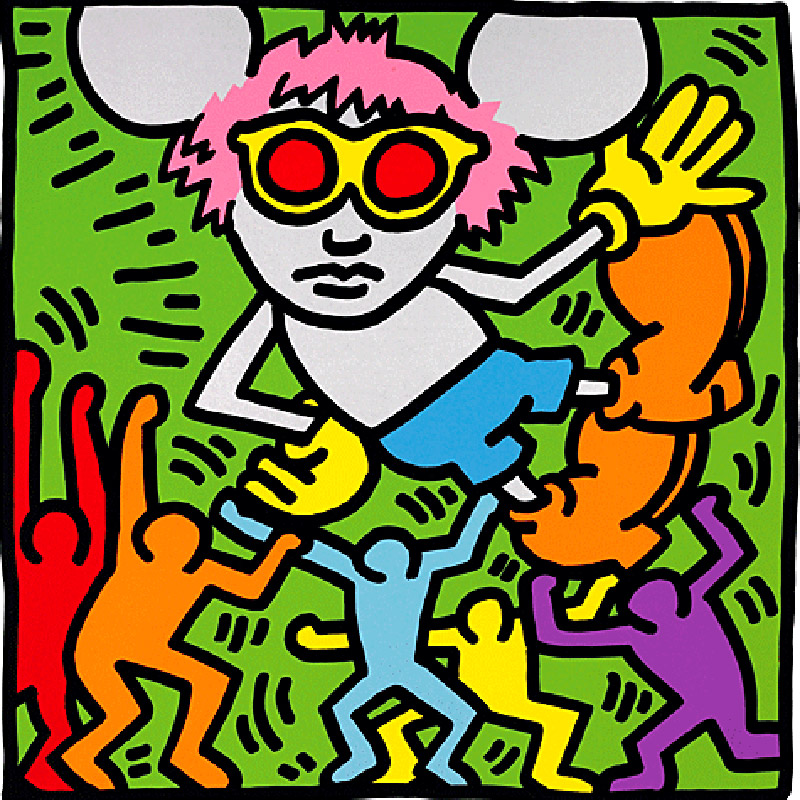
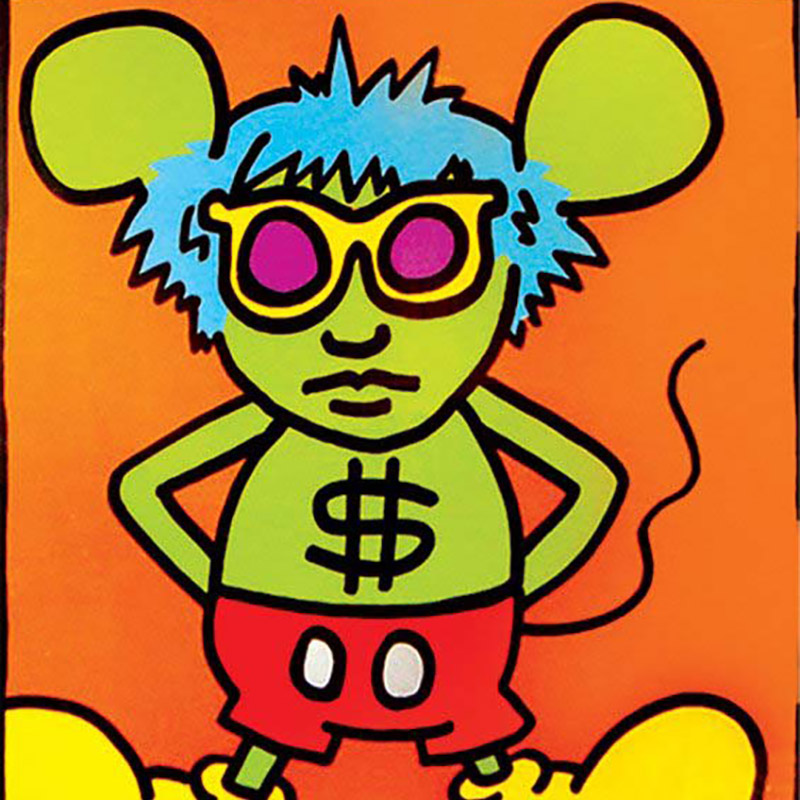
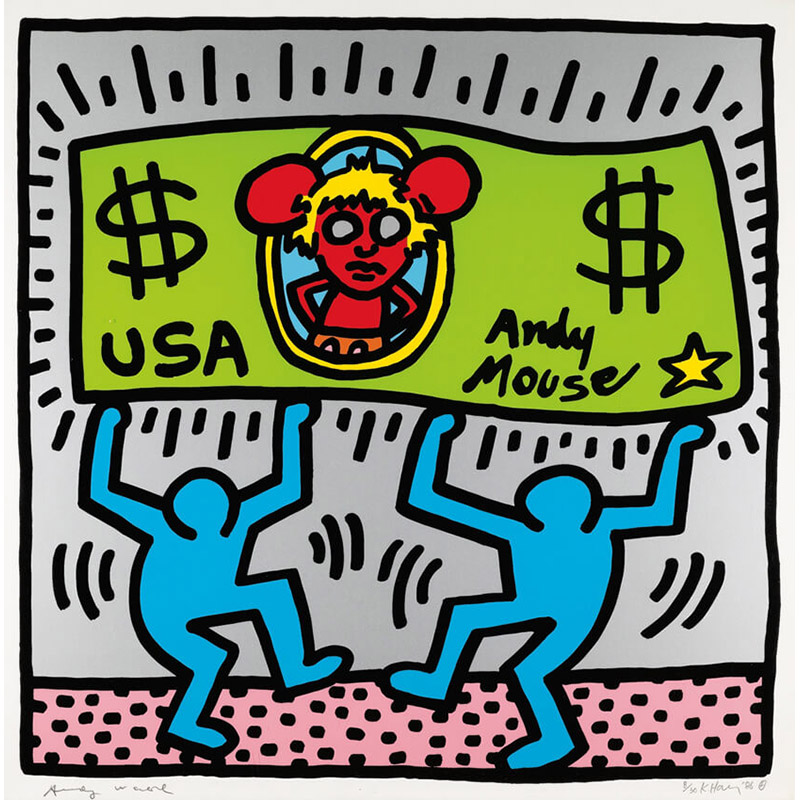
Keith Haring’s Andy Mouse is one of the most recognizable and sought-after print projects of his career. Created as a tribute to Andy Warhol, the series combines Haring’s energetic visual language with Warhol’s influence on Pop Art and 1980s New York culture.
For owners, the value of an Andy Mouse print depends on much more than the image alone. The exact plate, signature, edition number, proof type, condition, provenance, Littmann reference and whether the work belongs to a complete matching set can all affect the market.
If you own a Keith Haring Andy Mouse print and are considering selling it, the first step is determining exactly which impression you have.
What Is Keith Haring’s Andy Mouse?
Keith Haring created Andy Mouse in 1986 as a tribute to Andy Warhol, who was both a friend and an important artistic influence.
The project consists of four large color screenprints, each combining Haring’s graphic figures with a Mickey Mouse-inspired character representing Warhol.
The numbered edition was limited to 30, with additional Artist’s Proofs.
The small edition size, large format, recognizable imagery and connection between Haring and Warhol have helped make Andy Mouse one of the most important Haring print projects in the secondary market.
How Many Keith Haring Andy Mouse Prints Were Made?
The standard numbered edition consisted of:
- 30 numbered impressions
- 10 Artist’s Proofs
- Additional documented proof impressions may exist
Each print should be evaluated according to its specific edition or proof designation.
Because the numbered edition is relatively small compared with many other Haring print projects, availability can be limited.
Is Andy Mouse Signed by Keith Haring and Andy Warhol?
One of the most distinctive characteristics of the Andy Mouse edition is that documented examples are signed by both Keith Haring and Andy Warhol.
Keith Haring typically signed, dated and numbered the work, while Andy Warhol also signed the print in pencil.
This dual signature is an important feature of the documented edition and should be considered when identifying an Andy Mouse print.
A signature alone, however, should never be used as the sole basis for determining authenticity. The entire work should correspond with the documented edition.
How Do I Identify a Keith Haring Andy Mouse Print?
When reviewing an Andy Mouse, consider:
- Exact image
- Date
- Screenprinting technique
- Paper or board
- Sheet dimensions
- Keith Haring signature
- Andy Warhol signature
- Edition number
- Proof designation
- Printer blindstamp
- Publisher information
- Littmann catalogue reference
- Provenance
- Condition
Photographs of the full front and reverse are important, along with close-ups of both signatures, numbering and any blindstamps or labels.
What Is the Littmann Reference for Andy Mouse?
Keith Haring’s prints are documented in the Littmann catalogue of his editions on paper.
Andy Mouse appears in the Littmann catalogue and individual plates are commonly identified by their corresponding Littmann page references.
Auction houses routinely use Littmann references when cataloguing Andy Mouse impressions.
A Littmann reference can help identify the documented edition, but it does not independently authenticate a particular physical print.
The artwork itself should correspond with the documented medium, dimensions, edition, signatures, printer and publisher information.
Who Printed and Published Andy Mouse?
Documented Andy Mouse impressions were printed by Rupert Jasen Smith and published by George Mulder Fine Art.
The printer’s blindstamp can therefore be an important identifying detail.
When reviewing an impression, publisher and printer information should be considered together with the signatures, edition number, dimensions and Littmann documentation.
How Much Is a Keith Haring Andy Mouse Worth?
There is no single value for every Andy Mouse print.
Important factors include:
- Exact plate
- Numbered edition or proof
- Keith Haring signature
- Andy Warhol signature
- Condition
- Color quality
- Margins
- Printer blindstamp
- Provenance
- Prior exhibition history
- Complete set versus individual plate
- Current collector demand
Because Andy Mouse was produced in a relatively small edition, individual impressions can occupy a very different market from more widely available Haring prints.
The strongest valuation comparisons come from recent sales of the same Andy Mouse plate with similar edition status, condition and provenance.
Does the Andy Warhol Signature Affect Value?
The Warhol signature is an important part of the documented Andy Mouse edition.
Because the series directly references Warhol and documented impressions carry signatures from both artists, the presence and condition of both signatures should be reviewed carefully.
An impression missing expected characteristics may require additional research before meaningful market comparisons can be made.
The signature should always be considered in the context of the entire artwork rather than as a stand-alone indication of authenticity.
Is a Complete Andy Mouse Set More Valuable?
Andy Mouse was conceived as a group of four screenprints, although individual plates are frequently sold separately.
A complete matching set can have different market characteristics from an individual print.
When reviewing a complete set, consider:
- Whether all four images are present
- Whether edition numbers match
- Condition across all four works
- Signature consistency
- Printer and publisher information
- Provenance
- Whether the works have remained together historically
If you own multiple Andy Mouse prints, determine whether they form a matching set before deciding to sell them separately.
How Does Condition Affect Andy Mouse Value?
Condition can materially affect value.
Important issues include:
- Fading
- Surface rubbing
- Scratches
- Creasing
- Staining
- Foxing
- Tears
- Trimmed edges
- Mounting
- Tape residue
- Restoration
- Damage to the signatures or numbering
Because Andy Mouse works are large, brightly colored screenprints, surface condition and color quality can be especially noticeable.
Do not clean, trim or restore the work before obtaining specialist advice.
Does Provenance Matter for Andy Mouse?
Yes.
Strong provenance can help establish ownership history and provide additional confidence when the artwork is offered for sale.
Useful documentation can include:
- Original gallery invoice
- Auction invoice
- Collection history
- Exhibition labels
- Gallery labels
- Prior auction catalogues
- Insurance documentation
- Correspondence relating to the work
- Conservation records
Not every genuine Andy Mouse will have complete paperwork, but existing documentation should be preserved.
How Do I Know If My Andy Mouse Is Authentic?
No single characteristic proves authenticity.
Research should consider the complete artwork, including:
- Image
- Printing technique
- Dimensions
- Paper or board
- Haring signature
- Warhol signature
- Edition number
- Proof designation
- Printer blindstamp
- Publisher
- Littmann documentation
- Provenance
The Keith Haring Foundation no longer accepts new artworks for authentication review, so careful documentation, provenance and comparison with recognized published editions are especially important.
Numbered Editions vs. Artist’s Proofs
Most Andy Mouse impressions belong either to the regular numbered edition or to documented proof groups.
A standard impression might appear as:
12/30
Artist’s Proofs may be marked:
A.P.
Other documented proof designations can occasionally appear.
Proofs can have different market characteristics from the numbered edition, but rarity alone does not determine value. Condition, provenance, image and current collector demand remain important.
What Should I Send for an Andy Mouse Review?
Please send, whenever possible:
- Full photograph of the front
- Photograph of the reverse
- Close-up of Keith Haring’s signature
- Close-up of Andy Warhol’s signature
- Edition number or proof designation
- Full sheet and margins
- Dimensions
- Printer blindstamp
- Gallery or auction labels
- Purchase documentation
- Provenance
- Photographs of any condition issues
If you own more than one Andy Mouse print, send photographs of all of them so we can determine whether they may belong to a matching set.
Frequently Asked Questions About Keith Haring Andy Mouse
Is Keith Haring Andy Mouse valuable?
Andy Mouse is one of Haring’s more important limited-edition print projects. Value depends on the exact plate, edition or proof type, signatures, condition, provenance and current collector demand.
How many Andy Mouse prints were made?
The standard edition consisted of 30 numbered impressions plus 10 Artist’s Proofs. Other documented proof impressions may also exist.
Did Andy Warhol sign Andy Mouse?
Documented Andy Mouse impressions are signed by both Keith Haring and Andy Warhol. This dual signature is one of the defining characteristics of the edition.
Is Andy Mouse one print or a set?
Andy Mouse consists of four different screenprints. Individual plates are frequently sold separately, while complete matching sets can also appear on the market.
What size is Keith Haring Andy Mouse?
Documented examples are large-format works, with sheets approximately 38 x 38 inches. Exact measurements should still be compared with the specific documented plate and edition.
Can I sell a single Andy Mouse print?
Yes. Individual Andy Mouse plates are actively collected and sold separately. You do not need to own the complete set to sell an individual print.
Considering Selling Your Keith Haring Andy Mouse?
If you own a Keith Haring Andy Mouse print, Artist’s Proof, other documented proof or complete four-print set and are considering a sale, send us photographs and any information you have.
We can review the edition, signatures, Littmann information, condition, provenance and relevant current market activity.
If the Andy Mouse is a work we are interested in acquiring, we may provide a confidential direct purchase offer.
Read More About Keith Haring Art
How Much Is My Keith Haring Worth?
Learn what affects the value of Keith Haring prints, paintings and editions, including signatures, condition, rarity, provenance and recent comparable sales.
How to Tell If Your Keith Haring Is Original
Learn how signatures, edition numbers, Littmann references, provenance and documented publication details can help identify a Keith Haring artwork.
Keith Haring Apocalypse Series: Value, Editions & Identification
Explore Keith Haring’s 1988 Apocalypse portfolio, including its 10-print format, William S. Burroughs collaboration, edition structure, Littmann references, condition and complete-set considerations.
Keith Haring Fertility Suite: Value, Editions & Identification
Learn how to identify and value the five-print Fertility Suite, including lifetime signatures, edition size, Artist’s Proofs, condition, provenance and complete-set value.
Keith Haring Icons Series: Value, Editions & Identification
Learn about the five-print Icons portfolio, including estate stamps, Julia Gruen signatures, embossing, editions and complete-set value.
Keith Haring Pop Shop Prints: Value & Identification
Learn how to identify and value Keith Haring Pop Shop I–VI screenprints, including editions, signatures, Littmann references, estate-issued works and complete sets.
How to Sell Keith Haring Art
See how the selling process works, from submitting photographs and identifying the artwork to reviewing the market and receiving a potential direct purchase offer.
Sell Your Keith Haring
Considering selling a Keith Haring print, drawing, painting, sculpture or edition? Submit photographs and details about the artwork to begin the review process.