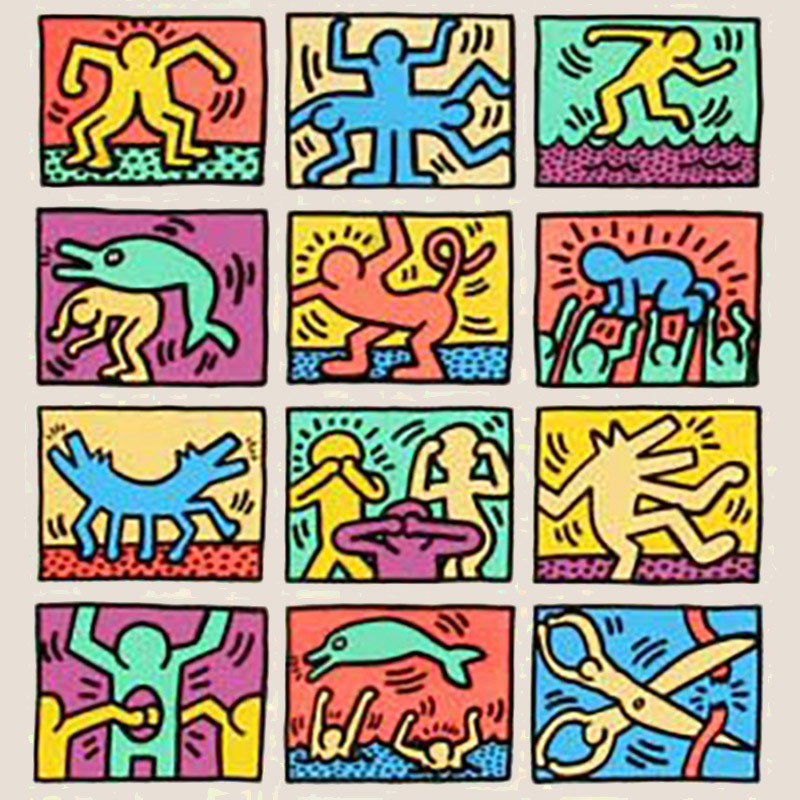

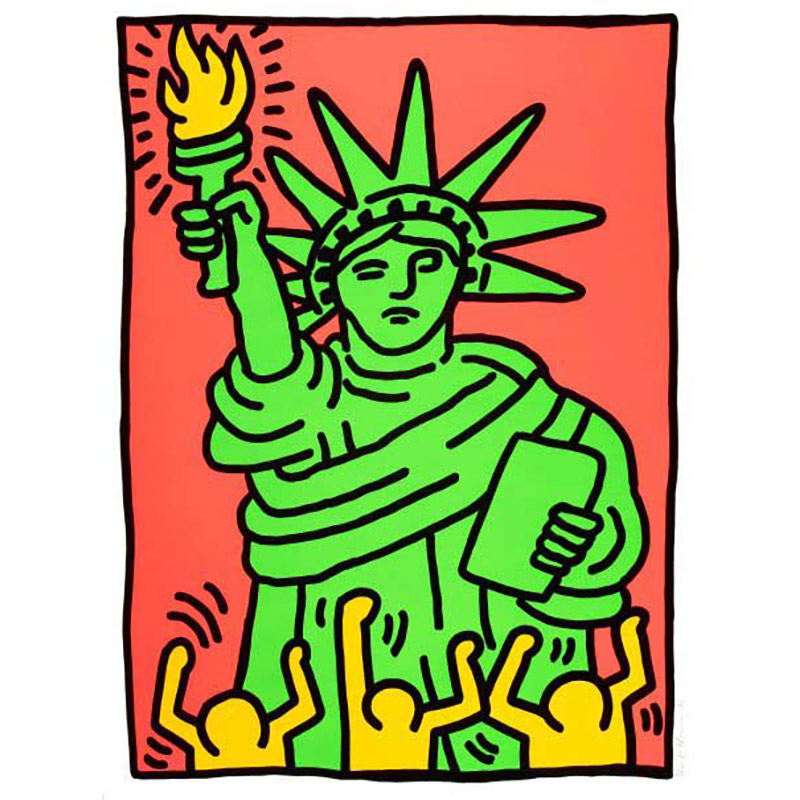
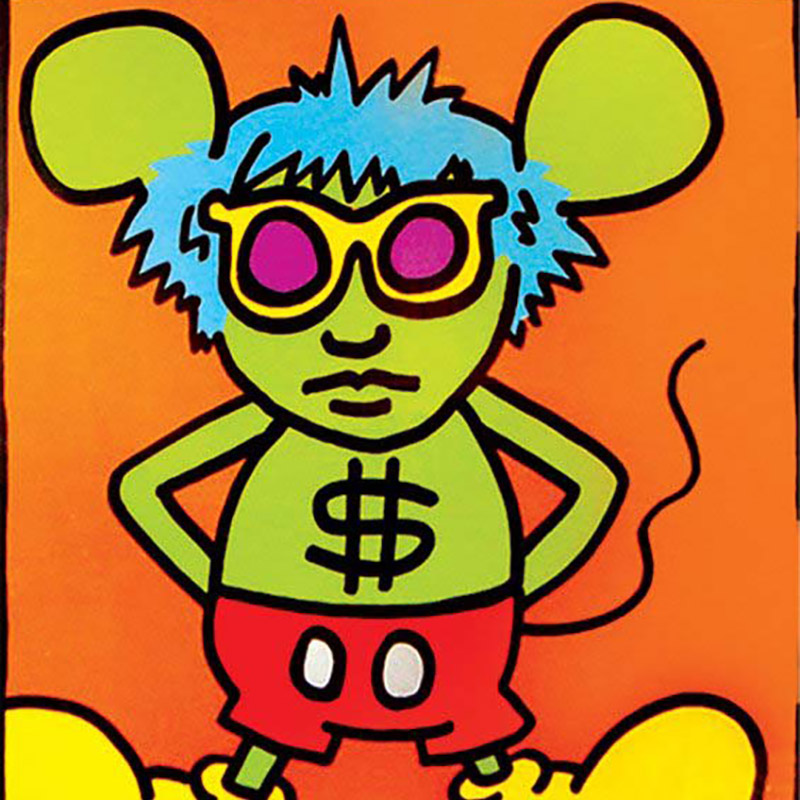
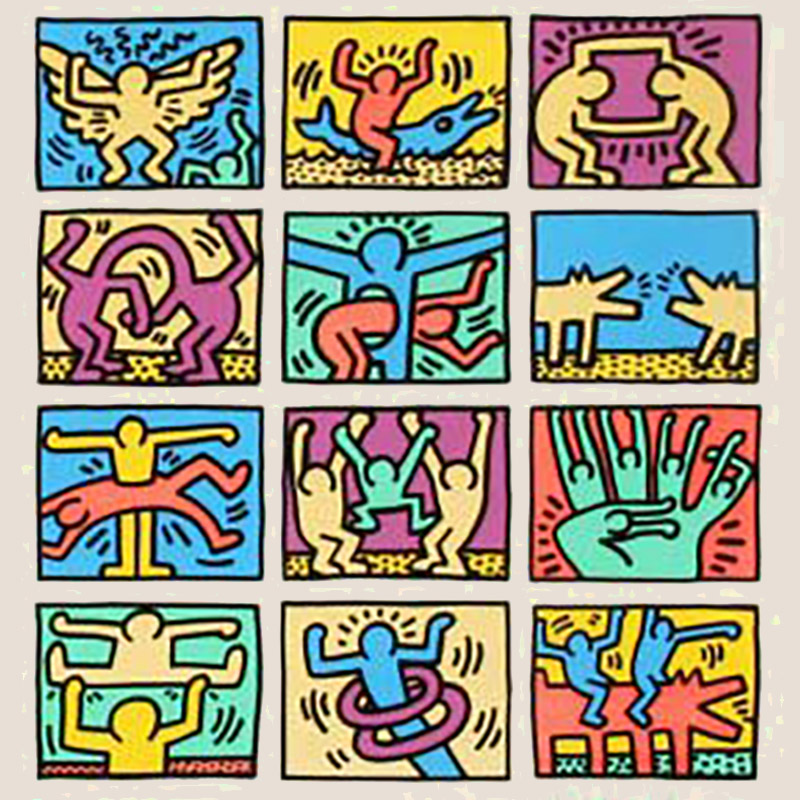
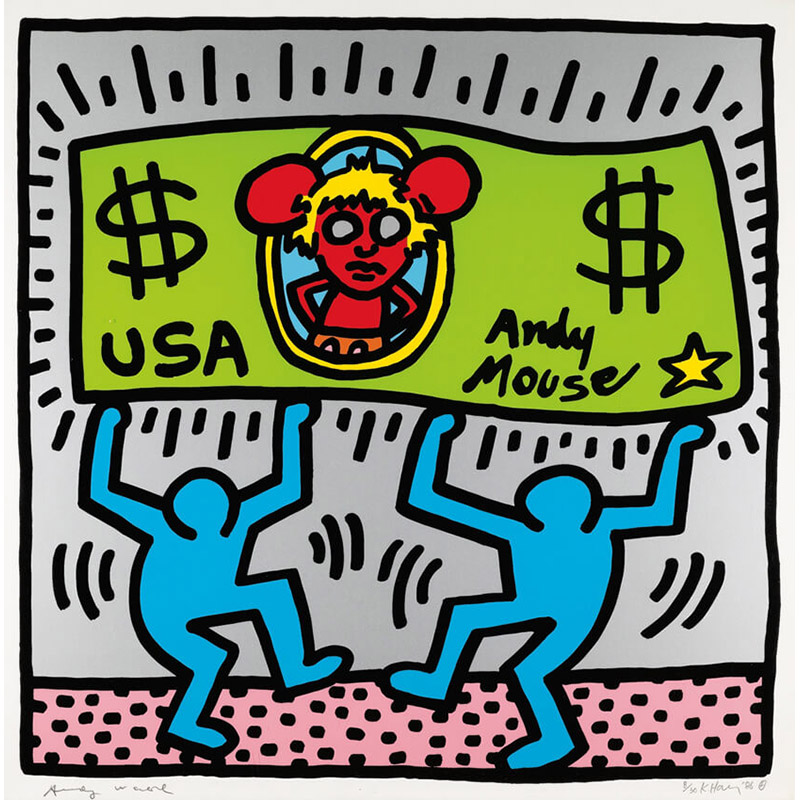
If you are trying to determine whether a Keith Haring print is original, the first step is identifying the exact documented edition—not simply checking for a signature or edition number.
Keith Haring created original screenprints, lithographs and other editioned works that can be distinguished from posters, reproductions and unauthorized copies by comparing the physical artwork with known edition information.
Important details can include the printing technique, paper, dimensions, signature or Estate authorization, edition number, proof designation, publisher, printer, blindstamps, Littmann catalogue reference and provenance.
Original Keith Haring Print vs. Reproduction
An original Keith Haring print was created as a work of graphic art within a documented edition.
A reproduction, poster or decorative print may simply reproduce Haring imagery without being part of the original edition.
The distinction can have a substantial effect on both identification and market value.
A work should not be considered original solely because it carries Haring’s name, a signature or an edition number. The physical artwork should correspond with the documented specifications for the edition.
Check the Keith Haring Littmann Reference
One of the primary references used for Keith Haring editions on paper is Keith Haring: Editions on Paper 1982–1990, associated with Klaus Littmann.
A Littmann reference can help identify:
- Title
- Date
- Medium
- Edition size
- Dimensions
- Printer
- Publisher
- Signature or Estate information
Major auction houses regularly cite Littmann references when cataloguing Haring prints. Sotheby’s and Christie’s, for example, document works from series such as Pop Shop and Icons with Littmann references alongside edition numbers, paper, publisher marks and Estate information.
A Littmann reference helps identify a documented edition, but it does not authenticate the physical impression by itself.
Check the Signature
Many original Keith Haring prints were signed and numbered by Haring during his lifetime.
However, not every authentic Haring edition carries Haring’s own signature.
Certain posthumous editions may carry:
- Keith Haring Estate stamp
- Julia Gruen signature
- Edition number
- Publisher blindstamp
- Printer information
For example, Sotheby’s documents Pop Shop VI as Estate-authorized, signed in pencil by Julia Gruen on the verso, numbered from the edition, and carrying publisher blindstamps.
That is why signature should always be evaluated in the context of the exact edition.
Lifetime-Signed vs. Estate-Authorized Keith Haring Prints
This is one of the most important distinctions in the Haring market.
A lifetime-signed work carries Keith Haring’s own signature.
An Estate-authorized work may instead carry the Keith Haring Estate stamp and Julia Gruen’s signature on the reverse.
Both categories can be legitimate documented editions, but they generally occupy different parts of the market.
Christie’s and Sotheby’s regularly catalogue Estate-authorized works such as Icons, Pop Shop V and Pop Shop VI with Estate stamps, Julia Gruen signatures, edition numbers and publisher blindstamps.
Check the Edition Number and Proof Type
Original Haring editions may appear as:
- Standard numbered editions
- Artist’s Proofs
- Printer’s Proofs
- Hors Commerce impressions
- Other documented proof types
Edition structure matters because an Artist’s Proof or other proof may be scarcer than the standard numbered edition.
The proof designation should always be compared with the known catalogue information for the specific work.
Check the Paper, Dimensions and Blindstamps
Paper and dimensions can be important identifiers.
When researching a Haring print, compare:
- Sheet size
- Image size
- Paper type
- Embossing
- Blindstamps
- Publisher marks
- Printer information
For example, Sotheby’s records Untitled (from Icons) as a screenprint with embossing on Arches Cover paper, with an Estate stamp, Julia Gruen signature, edition number and Tony Shafrazi Editions blindstamp.
These details help distinguish one documented edition from another.
Look for Publisher and Printer Information
Publisher and printer information can help confirm the identity of a Haring edition.
Important names associated with Haring prints include:
- Tony Shafrazi Editions
- Martin Lawrence Limited Editions
- Durham Press
- Studio Heinrici
Auction records routinely document these details alongside edition numbers and Estate information.
A mismatch between the physical artwork and the known publisher or printer information may warrant further investigation.
Can a Keith Haring Poster Be Original?
Not every poster is an original print.
Some Haring posters were created for exhibitions, events or commercial purposes, while others are later reproductions of Haring imagery.
The correct identification depends on the exact printing method, dimensions, edition information, publisher, printer and catalogue documentation.
A poster should not be assumed to be an original Haring print simply because it contains his artwork or signature.
Why Provenance Matters
Provenance is the documented ownership history of an artwork.
Useful provenance may include:
- Gallery invoices
- Auction records
- Collection history
- Exhibition records
- Estate documentation
- Publisher information
- Previous appraisals
- Littmann catalogue references
Provenance does not replace physical identification, but it can support the history and marketability of a Keith Haring work.
Does a Certificate of Authenticity Prove a Keith Haring Is Original?
A certificate of authenticity can be useful supporting documentation, but it should not be relied upon by itself.
A stronger evaluation considers the signature or Estate authorization, edition number, paper, dimensions, printing technique, publisher, printer, blindstamps, Littmann reference and provenance together.
For certain Estate-authorized Haring editions, auction records specifically describe a stamped certificate or Estate stamp signed by Julia Gruen.
Does the Keith Haring Foundation Authenticate Artwork?
No new authentication applications are accepted.
The Keith Haring Foundation officially dissolved its authentication committee and stopped accepting new requests for review after September 1, 2012.
That makes accurate edition identification, provenance, catalogue references and supporting documentation especially important when researching a Haring work today.
What Should I Send to Identify My Keith Haring?
If you are unsure whether your Haring is an original print, Estate-authorized edition, poster or reproduction, send us:
- A clear photograph of the front
- A photograph of the reverse
- Close-ups of the signature
- Estate stamp, if present
- Edition number or proof designation
- Sheet dimensions
- Publisher or printer blindstamps
- Labels or inscriptions
- Littmann reference, if known
- Gallery or auction documentation
- Provenance, if available
Clear photographs are often enough for us to begin identifying the work and researching the relevant edition.
Frequently Asked Questions About Original Keith Haring Prints
How can I tell if my Keith Haring print is original?
Start by comparing the printing technique, paper, dimensions, signature or Estate authorization, edition number, publisher, printer, blindstamps and Littmann catalogue reference with the documented edition. No single feature should be used by itself.
Does an original Keith Haring print have to be signed?
No. Many original Haring prints were hand-signed during his lifetime, but certain posthumous Estate-authorized editions carry the Estate stamp and Julia Gruen’s signature instead.
What is a Littmann number?
A Littmann reference identifies a documented Keith Haring edition and can provide information about the title, date, medium, dimensions, edition size, printer and publisher. It helps identify the work but does not authenticate the physical impression on its own.
Are Keith Haring Estate-signed prints original?
Certain Estate-authorized editions are legitimate documented works even though they were not signed by Haring during his lifetime. These may carry the Keith Haring Estate stamp and Julia Gruen’s signature on the reverse.
Can the Keith Haring Foundation authenticate my artwork?
The Foundation no longer accepts new authentication submissions. Its authentication committee was dissolved in 2012.
Have a Keith Haring You Want Identified or Valued?
If you own a Keith Haring print, painting, drawing, sculpture or other artwork, we can help identify the exact work, review relevant catalogue and edition information and evaluate its current market.
For works we are actively seeking, we may also make a confidential direct purchase offer.
Get a Confidential Keith Haring Valuation
Read More About Keith Haring Art
How Much Is My Keith Haring Worth?
Learn what affects the value of Keith Haring prints and editions, including signature type, condition, rarity, provenance and recent comparable sales.
How to Sell Keith Haring Art
See how the selling process works, from submitting photographs and identifying the artwork to market review and a potential direct purchase offer.
Sell Your Keith Haring Art: A Guide for Owners and Collectors
Read our complete guide to identifying, evaluating and selling Keith Haring prints, paintings, drawings, sculptures and editions.
Keith Haring Print Series Guide
Explore important Keith Haring print series, including Pop Shop, Andy Mouse, Fertility, Apocalypse, Icons and other major editions.
Keith Haring Pop Shop Prints: Value & Identification
Learn how Pop Shop I–VI prints are identified using edition details, signatures, estate stamps, Littmann references, publisher information and condition.
Keith Haring Andy Mouse: Value, Editions & Identification
Explore Andy Mouse identification, including Haring and Warhol signatures, edition numbers, proof types, printer information and provenance.
Keith Haring Icons Series: Value, Editions & Identification
Learn how to identify the Icons portfolio using estate stamps, Julia Gruen signatures, embossing, edition information, Littmann references and publisher details.
Keith Haring Fertility Suite: Value, Editions & Identification
Learn how to identify Fertility Suite prints using lifetime signatures, edition numbers, Artist’s Proof designations, Littmann references and provenance.
Keith Haring Apocalypse Series: Value, Editions & Identification
Explore Apocalypse identification, including Haring signatures, edition structure, Rupert Jasen Smith printing details, George Mulder publication information and Littmann references.
Sell Your Keith Haring
Considering selling a Keith Haring print, drawing, painting, sculpture or edition? Submit photographs and details about the artwork to begin the review process.